Skip to content
Independent studio · taking a few projects at a time

Websites and business apps,
built around how you actually work.

Layer Logic Web is a small, hands-on practice for custom websites and lightweight business applications. No templates. No assembly-line packages. We start with your workflow, present real concepts before building, and stay in close contact the whole way through.

Based
Independent · US-based · remote
Found via
Fiverr · Craigslist · referral
Capacity
A handful of active projects at a time
What we build

A small set of services we do carefully.

We focus on the work where close communication and a workflow-first approach actually matter. Everything below is built custom — there are no templates dressed up to look new.

01 / Websites

Custom marketing sites

Multi-page or single-page sites for small businesses, service providers, and independent operators who want something that looks like them — not like a theme.

  • Discovery, sitemap, and content shaping
  • Concept design before any code
  • Hand-built layouts, no page-builder bloat
  • SEO-friendly markup and fast hosting setup
02 / Business apps

Lightweight business applications

Internal tools, client portals, intake forms, scheduling flows, and small dashboards that replace spreadsheets and copy-paste workflows.

  • Workflow mapping with you and your team
  • Forms, records, dashboards, role-based access
  • Integrations with the tools you already use
  • Documented handoff so you’re not locked in
03 / Rework & rescue

Rebuilds and clean-ups

Inherited a site that nobody can edit? A page builder that has spiraled? We assess what’s worth keeping and rebuild the parts that are fighting against you.

  • Audit of current site, hosting, and content
  • Clear recommendation: rebuild, refactor, or leave alone
  • Selective rebuilds without losing what works
  • Plain-language documentation for what changed
How we work

Workflow first. Concepts before code. You, involved throughout.

Most agencies are optimized for their own throughput. We’re optimized for ending up with the right thing. That means a slower start, a clearer middle, and far less surprise at the end.

  1. Step 01

    Discovery — understand the workflow, not just the wishlist.

    A real conversation about how your business actually runs day-to-day: who does what, where the friction is, what needs to be visible to customers, and what doesn’t. We take notes, ask follow-ups, and map it out.

  2. Step 02

    Concept — show, then decide.

    Before we build anything, we present 1–2 concept directions: structure, key pages, primary screens, tone of voice. You react, we adjust, and we agree on the direction while it’s still cheap to change.

  3. Step 03

    Design & build — close communication, small loops.

    We share progress in short, frequent loops — not 4-week silences. You stay involved enough to catch issues early, but never have to manage us. We write the code, you stay in the loop on what it’s doing.

  4. Step 04

    Launch & handoff — without lock-in.

    Launch is just a milestone, not a finish line. We document what’s running, hand over accounts and access, and make sure another developer could pick it up. You own everything we built.

Why only a few projects at a time

Attention is the product.

A workflow-first project can’t be done well in parallel with twenty others. So we don’t.

A capped workload is how we keep our process honest. You get the same person on calls, in your code, and on email — for the whole project. When we’re full, we say so, instead of saying yes and disappearing for three weeks.

One point of contact, every time
No account managers, no handoffs between teams, no “let me check with the dev.”
Real response times
Replies in hours, not days. You always know what we’re doing this week.
Custom, not packaged
No bronze / silver / gold tiers. The proposal reflects your project, not a price sheet.
Honest scoping
If a smaller scope is the right answer, we’ll say so. If it’s the wrong tool entirely, we’ll say that too.
Sample work · concept examples

A look at the kind of work we ship.

These are concept examples used to demonstrate design direction and the breadth of project types we take on — small business sites, service providers, fitness, and lightweight client portals.

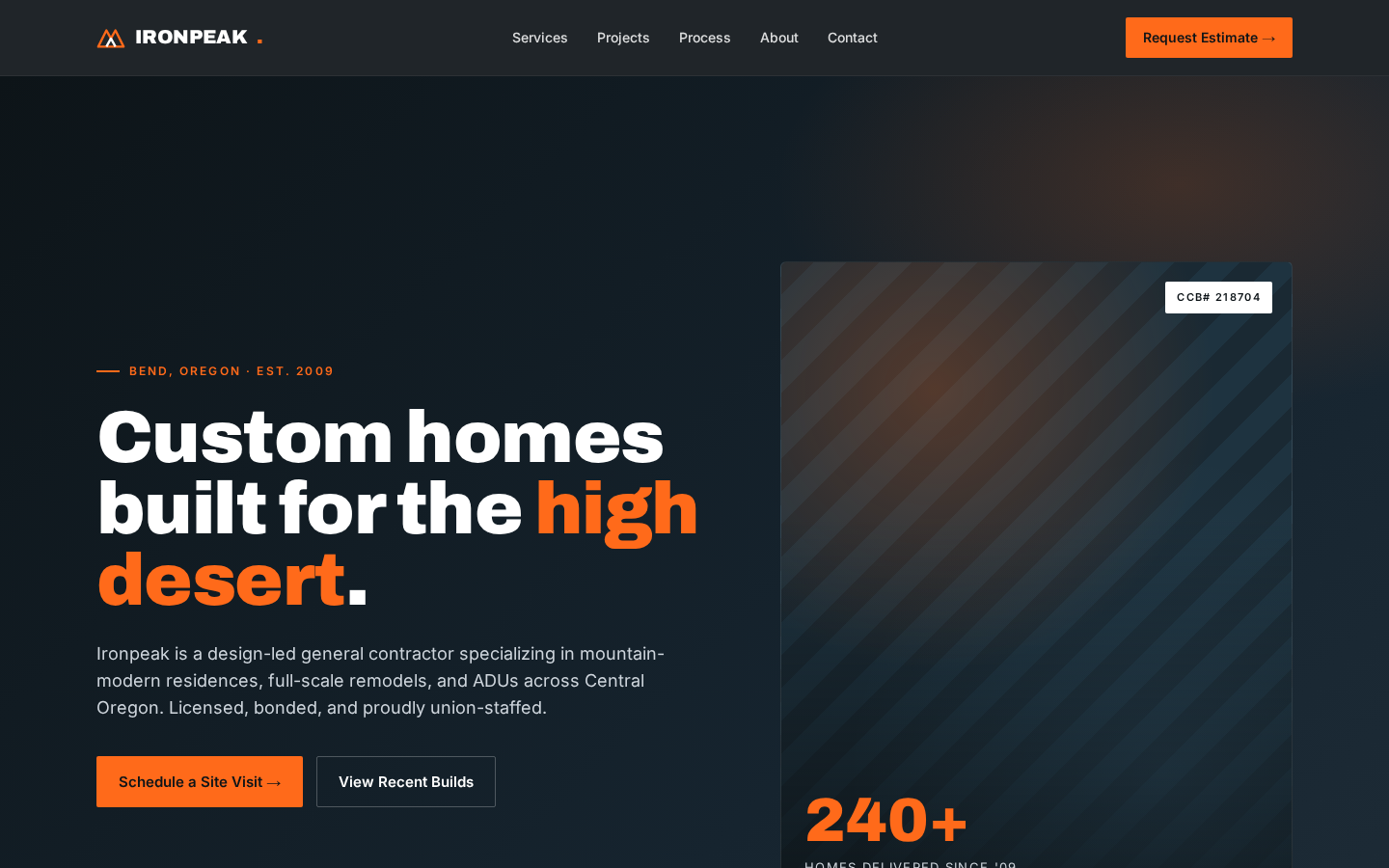
Concept site for a residential contractor: hero with project photo, services grid, and quote CTA.

Residential contractor

Marketing site · 5 pages

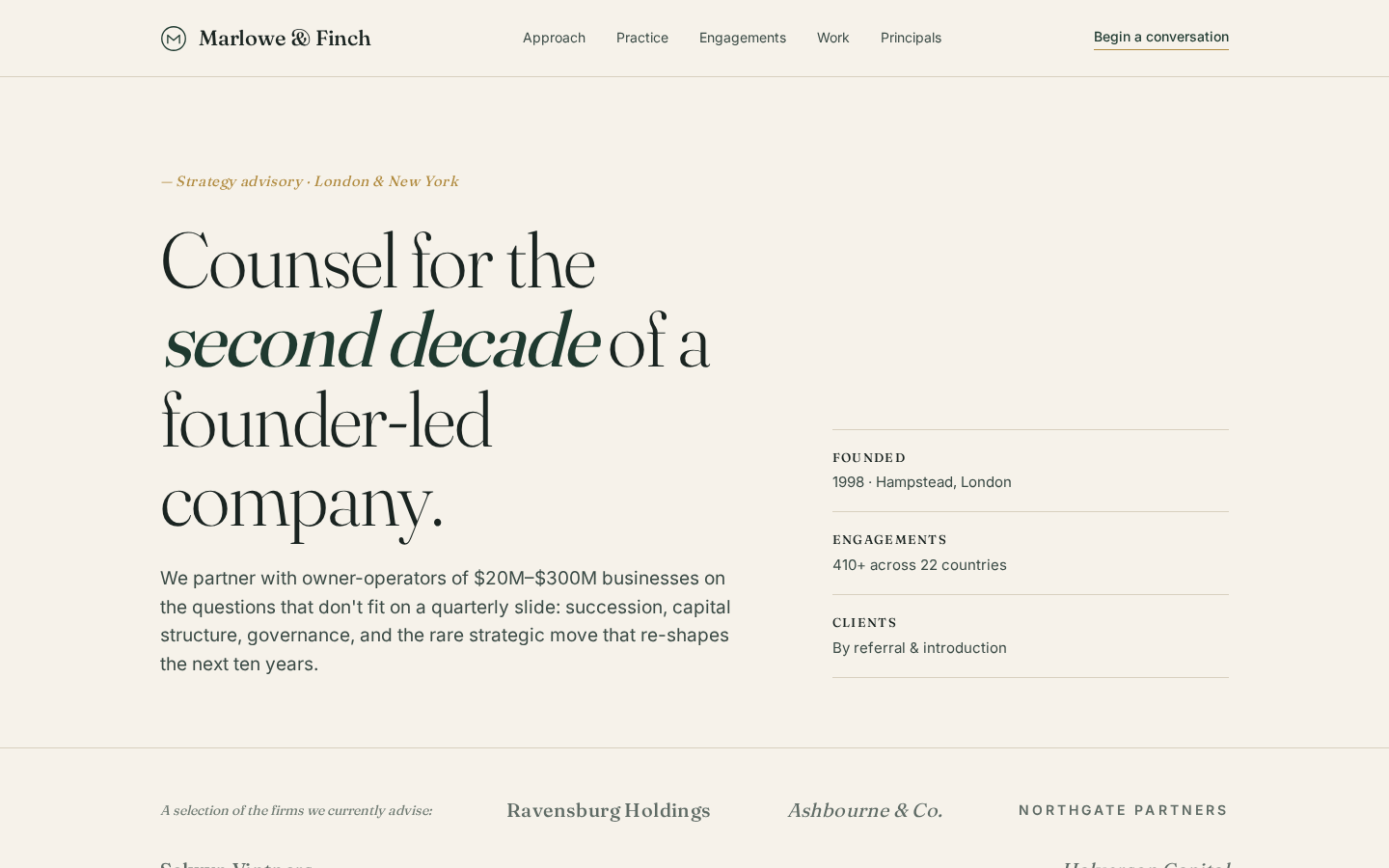
Photo-led marketing site with a clear path from project gallery to quote request, plus a simple lead intake.

Concept site for an independent consultant: editorial layout, services, and contact form.

Independent consultant

Marketing site · single page

Editorial single-page site emphasizing voice and credibility, with a focused consultation-request flow.

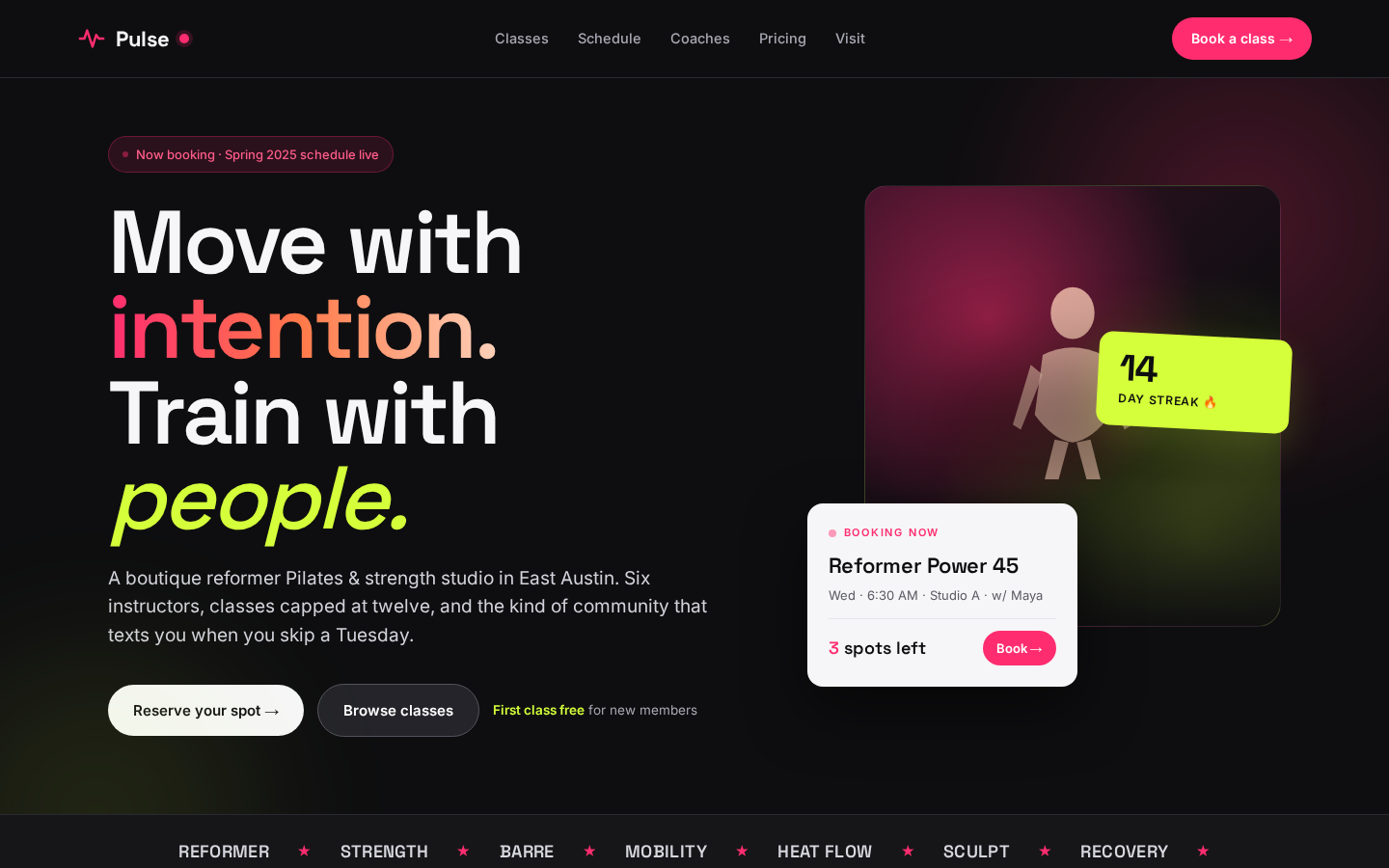
Concept site for a fitness studio: schedule, class pages, and intro offer.

Fitness studio

Marketing site · schedule + intro

Class-focused site with a clean schedule view and an intro-offer funnel for new members.

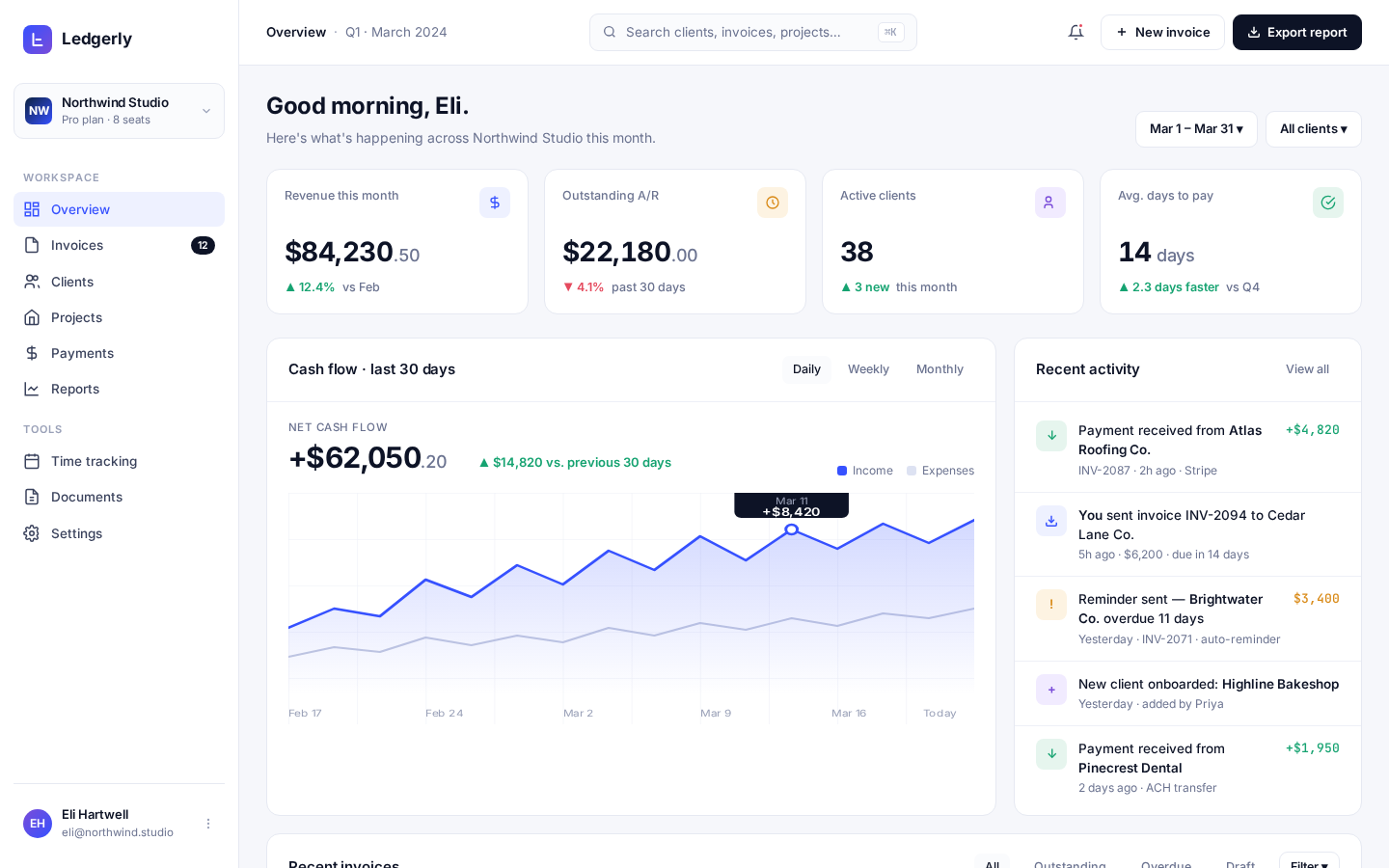
Concept client portal: dashboard with projects, messages, and document list.

Client portal

Business app · authenticated

Lightweight portal for sharing project status, documents, and messages with clients — replacing a tangle of email threads.

Concept examples shown are fictional and used to demonstrate design direction. No real client names, logos, or content are represented.

Is this a fit?

Who this is — and isn’t — for.

We’d rather refer you to someone else than take on a project we’re wrong for. Here’s a quick read on where we tend to do our best work.

A good fit

  • Small businesses or independent operators who want something custom and lasting.
  • Service providers whose website needs to actually generate leads, not just exist.
  • Teams replacing spreadsheets and ad-hoc tools with a real, simple application.
  • Owners who want to stay involved in decisions and care about how things are built.
  • Projects where workflow and clarity matter more than speed-to-ship.

Probably not a fit

  • “Cheapest possible site this weekend” — a templated builder will serve you better.
  • Large enterprise builds needing a full agency, account team, and procurement process.
  • Crypto/Web3/affiliate-funnel projects where the goal is volume over substance.
  • Anyone who wants to skip discovery and just “make it look like this other site.”
  • Projects where the owner expects to be invisible until launch day.
Project ranges

A rough idea of where projects land.

We don’t sell fixed packages — every quote is built from scope. These ranges are just to help you sanity-check whether we’re in the same ballpark before you reach out.

Compact

Small marketing site or focused landing experience.

$1.5k–$4k typical
  • 1–5 pages, custom design
  • Lightweight CMS or hand-coded
  • Contact, lead capture, basic SEO
  • Launch + handoff documentation

Timeline · 2–4 weeks

Extended

Custom business apps and larger rebuilds.

$10k+ scoped
  • Multi-step workflows, accounts, roles
  • Dashboards, records, lightweight APIs
  • Phased delivery with milestones
  • Documented handoff for future devs

Timeline · scoped per project

Ranges are illustrative and not commitments. Every project is scoped and quoted individually after discovery.

FAQ

Common questions.

Why don’t you use templates or page builders?

Templates optimize for speed of delivery, not fit. They tend to push your business toward whatever the template was designed around, instead of the other way around. Custom work takes longer up front, but it ends up being easier to maintain and easier to grow into.

How involved do I need to be?

Enough to make decisions — not enough to manage us. Expect a few short calls or message threads per week during active phases, plus a longer review at each milestone. Most clients spend a couple of hours a week on the project at most.

Why do you only take on a few projects at a time?

Because the process only works if we’re actually paying attention. Running ten projects in parallel would force us into a templated, assembly-line mode of working — which is exactly what we’re trying to avoid. When we’re full, we say so and offer a start date.

Do you offer fixed-price packages?

Not really. Every project is quoted from scope, not from a tier sheet. Once discovery is done and we’ve agreed on a direction, you get a written proposal with a fixed scope and a fixed price for that scope — so there are no open meters.

Who owns the site and the code when we’re done?

You do. The domain, hosting, accounts, code, and content all belong to you. We hand over access, write down what’s where, and make sure another developer could take it on if you ever needed to switch.

Do you maintain sites after launch?

We include a short post-launch window on most projects to handle anything that surfaces in the first few weeks. After that, we can do ongoing maintenance hourly or on a small retainer — but it’s never required.

Where did you find me — Fiverr or Craigslist?

Both. We list there because they’re the channels small businesses and independent operators actually use. The work itself is the same regardless of how you found us.

Get in touch

Tell us about your project. We’ll tell you honestly whether we’re the right fit.

A short message is enough to get started — what you do, what you’re trying to build or fix, and a rough timeline. If we’re a fit, we’ll set up a discovery call. If we’re not, we’ll point you somewhere better.

Request a consultation